


Most businesses have a CRM. Few are actually using it to its full potential.
Too often, CRMs are treated like a glorified contact list or a place sales logs notes after a call. But when used correctly, your CRM should be the central nervous system of your marketing and sales efforts.
At Two Trees, we like to treat the CRM as a source of truth where all customer-facing data lives so we can leverage that data to increase visibility, amplify performance, improve efficiency, and ultimately make smarter decisions to drive growth.
So what is a CRM exactly?
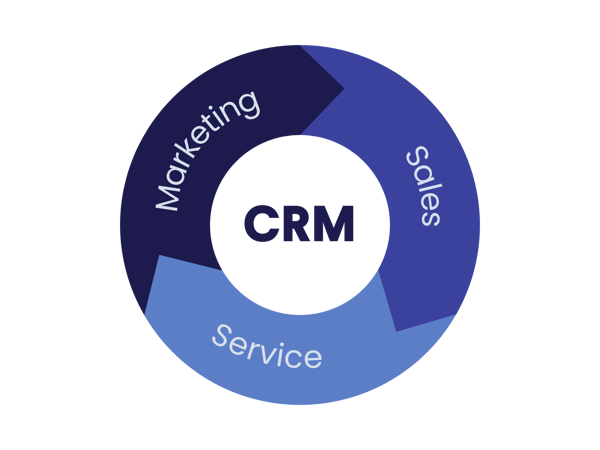
A CRM (Customer Relationship Management) system is a central hub for tracking every meaningful interaction between your business and your customers or leads. It could be a number of tools and processes used in conjunction with each other or one centralized system. The CRM systems we see most often with our clients are Salesforce and Hubspot, but there are many other options including Zoho, Microsoft Dynamics, Zendesk and more, often with a niche tailored to specific industries.
When set up properly, your CRM allows marketing, sales, and customer success to all collaborate effectively. When set up poorly, it will be a major source of pain for your team and you’ll have questions not only about the value of the system itself, but also uncertainty surrounding the value of your efforts to grow the business. So let’s go through 5 ways to increase your marketing impact using your CRM.
1. Build a foundation of good data.
A CRM is a force multiplier, but that means what you get out of it is a reflection of what you put in. If your input is garbage, your output will just be an even bigger, harder to manage pile of garbage.
Thinking about what you should feed into your CRM is a good place to start and the data you should (or have the ability to) capture depends a lot on your product and industry, but here are some key examples:
- Website & Digital Behavior:
- Traffic patterns, page views, and session duration.
- User interactions: clicks, form submissions, downloads.
- E-commerce activity: cart behavior, purchases, abandoned checkouts.
- Advertising & Campaign Performance:
- Ad engagement from Google, Meta, LinkedIn, and other platforms.
- Campaign attribution and conversion paths.
- Cost per acquisition and ROI metrics.
- Marketing Activities:
- Email campaigns: sends, opens, clicks, conversions.
- Social media engagement and content performance.
- Webinar attendance and content downloads.
- In-person event attendance lists and opt-ins.
- Sales Activities:
- Email and call logs with outcomes.
- Meetings booked with notes and follow-up tasks.
- Deal pipeline stages, values, and close probabilities.
- Proposal history and objections.
- Customer & Account Records:
- Historical first-party data on customers, accounts, transactions, and leads.
- Subscription status, contract terms, and renewal dates.
- Purchase history and lifetime value.
Think of what you are putting into your CRM like the roots of a tree. The deeper and stronger the roots, the healthier everything above ground becomes. A foundation of strong processes and data will fruit greater efficiencies, impact, and visibility across all of your acquisition, retention, and growth efforts.
2. Unify sales, marketing, and customer success around one pipeline.
The ultimate goal with a centralized CRM is the ability to connect efforts to outcomes. Your CRM should clearly show where every lead is in the funnel. From first touch, to closed deal, to brand loyalty.
This allows marketing to see which campaigns are actually driving qualified leads and allows sales to prioritize follow-up based on intent and readiness. But the benefits extend far beyond just handoffs between teams.
When everyone works from a single source of truth, you get:
-
Seamless handoffs: No more leads falling through the cracks during transitions from marketing to sales, or sales to customer success. Context and history travel with each contact.
-
Shared accountability: Each team can see how their work contributes to revenue. Marketing understands which content moves deals forward. Sales sees where their time is spent most effectively. Customer success identifies growth opportunities based on product usage.
-
Smarter resource allocation: When you can trace revenue back to specific activities, you know where to double down. Which campaigns deserve more budget? Which sales behaviors correlate with higher win rates? Which onboarding steps predict long-term retention?
-
Faster problem-solving: When a deal stalls or a customer churns, the full context is visible. You can identify patterns and address root causes rather than symptoms.
The alternative of siloed systems and fragmented data creates blind spots, duplicated effort, and misaligned incentives. A unified pipeline ensures your entire go-to-market motion works as one coordinated system rather than competing departments.
3. Create customizations and automations that make life easier.
If you want to unite your team around using one system, you need to make sure the system is easy to use. Most CRM systems are highly customizable and often there are small modifications you can make that have a huge impact on the experience of using it. The best place to start is very simple, but you’d be surprised how many organizations don’t do this - talk to your teams about their processes. Listen for pain points and opportunities.
An easy example of this is to consider your hierarchy of data visibility. Talk to your sales team about what information they can leverage in the sales process and ensure that information is surfaced very clearly in the places that they are going to interact with leads.
Another way to make your team’s life easier is through automations which are good for much more than just email drip sequences. This is where you can really start to get the most value out of all the effort you’ve spent getting your data into the system - that data is actionable! If your customer success teams want to add the personal touch of a handwritten birthday card to customers, create an automation that sends them a notification of upcoming birthdays. If your buyer's journey involves recurring purchases, measure the average purchasing cadence at the customer level and trigger a notification when that cadence is exceeded by X days/weeks.
4. Build reports and dashboards that connect efforts to outcomes.
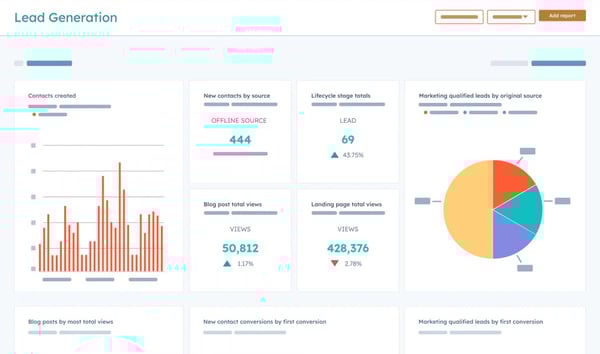
You could have all the data in the world, but it's only useful if you can translate it into something that can be used to take action and make decisions. Your reports and dashboards turn that data into a digestible narrative that serve as fuel for key questions to drive your company forward.
Start by identifying the questions that actually matter to your business:
-
For Marketing: Which campaigns generate the highest quality leads? What channels should get the most focus? How long does it take for a marketing-qualified lead to become sales-ready? Which content assets correlate with deal velocity?
-
For Sales: What's the conversion rate at each pipeline stage? Where do deals stall, and why? Which lead sources have the highest win rates? How does rep performance compare across different segments or deal sizes?
-
For Leadership: What's the actual ROI of our go-to-market investments? Are we trending toward our revenue targets? Which customer segments are most profitable? Where should we allocate resources next quarter?
The key is building dashboards that answer these questions at a glance. Your marketing team shouldn't need to run custom reports every week to see pipeline contribution. Your sales leaders shouldn't have to export spreadsheets to understand rep productivity. These insights should be live, visual, and accessible.
But keep in mind that your dashboard isn't a data dump, it's a communication tool. Focus on the 5-10 metrics that actually drive action. If a number doesn't change behavior, it doesn't belong on your dashboard.
Even better, create alerts and thresholds that notify teams when something needs attention. If deal velocity drops below a certain point, trigger a notification. If a high-value account goes quiet for two weeks, flag it for outreach.
The ultimate goal is predictability. When you can see patterns in your data—which activities lead to closed deals, which signals indicate churn risk, which behaviors predict expansion opportunities—you move from reactive scrambling to strategic execution. That's when your CRM becomes a true competitive advantage.
5. Gradually layer in AI across all of your efforts.
You didn’t think we’d get through a modern marketing blog without touching on AI did you? The capabilities of AI are changing by the day, but what is certain is that the 'garbage in, garbage out' mantra we touched on with CRMs applies just as much to AI. Hey... lucky for us building that quality foundation of data is already what we've been focused on doing throughout this blog!
Here are some areas you can use AI with your CRM:
-
Lead Scoring and Prioritization: AI can analyze thousands of data points to predict which leads are most likely to convert. Instead of relying on simple demographic filters or manual point systems, AI models learn from your historical win/loss data to identify patterns that humans might miss. This means your sales team spends time on the opportunities that actually matter.
-
Predictive Analytics: Beyond lead scoring, AI can forecast deal closure probability, identify accounts at risk of churn, and spot expansion opportunities before they're obvious. If customers who engage with certain features or content are statistically more likely to upgrade, AI surfaces those patterns and flags the accounts showing similar behaviors.
-
Automated Data Enrichment and Hygiene: AI can continuously clean your database by identifying duplicates, standardizing formatting, filling in missing information, and flagging outdated records. It can also enrich your contact data by pulling in relevant information from public sources, keeping your CRM current without manual effort.
-
Content and Message Personalization: AI can analyze which messaging resonates with different customer segments and automatically personalize email copy, suggest optimal send times, or even generate first-draft outreach based on a prospect's industry, role, and behavior patterns.
-
Conversational AI and Chatbots: Intelligent chatbots can qualify leads 24/7, answer common questions, book meetings, and route conversations to the right team members—all while logging everything back into your CRM to maintain that complete customer view.
-
Sales Intelligence and Coaching: AI can analyze sales calls and emails to surface insights about what's working. Which talk tracks lead to conversions? Which objections are deal-killers? AI can even provide real-time coaching suggestions during calls or flag when a deal needs manager attention.
The key is to start small and build incrementally. Don't try to implement every AI feature at once. Pick one high-impact use case, validate that it works with your data, and expand from there. The businesses that win with AI aren't the ones with the fanciest tools—they're the ones who've done the unglamorous work of building clean, structured data that AI can actually learn from.
That's the real advantage of getting your CRM house in order first. Once you have that foundation, AI doesn't just automate tasks—it multiplies the intelligence and effectiveness of your entire revenue operation.
Final Thoughts
A CRM isn’t just a sales tool. It’s a marketing engine, a reporting system, and a strategic advantage when used correctly. If you’re investing in marketing but not fully leveraging your CRM, you’re leaving performance on the table.
Let's chat about your CRM and how we can help you amplify the impact of your efforts and connect those efforts to outcomes.