

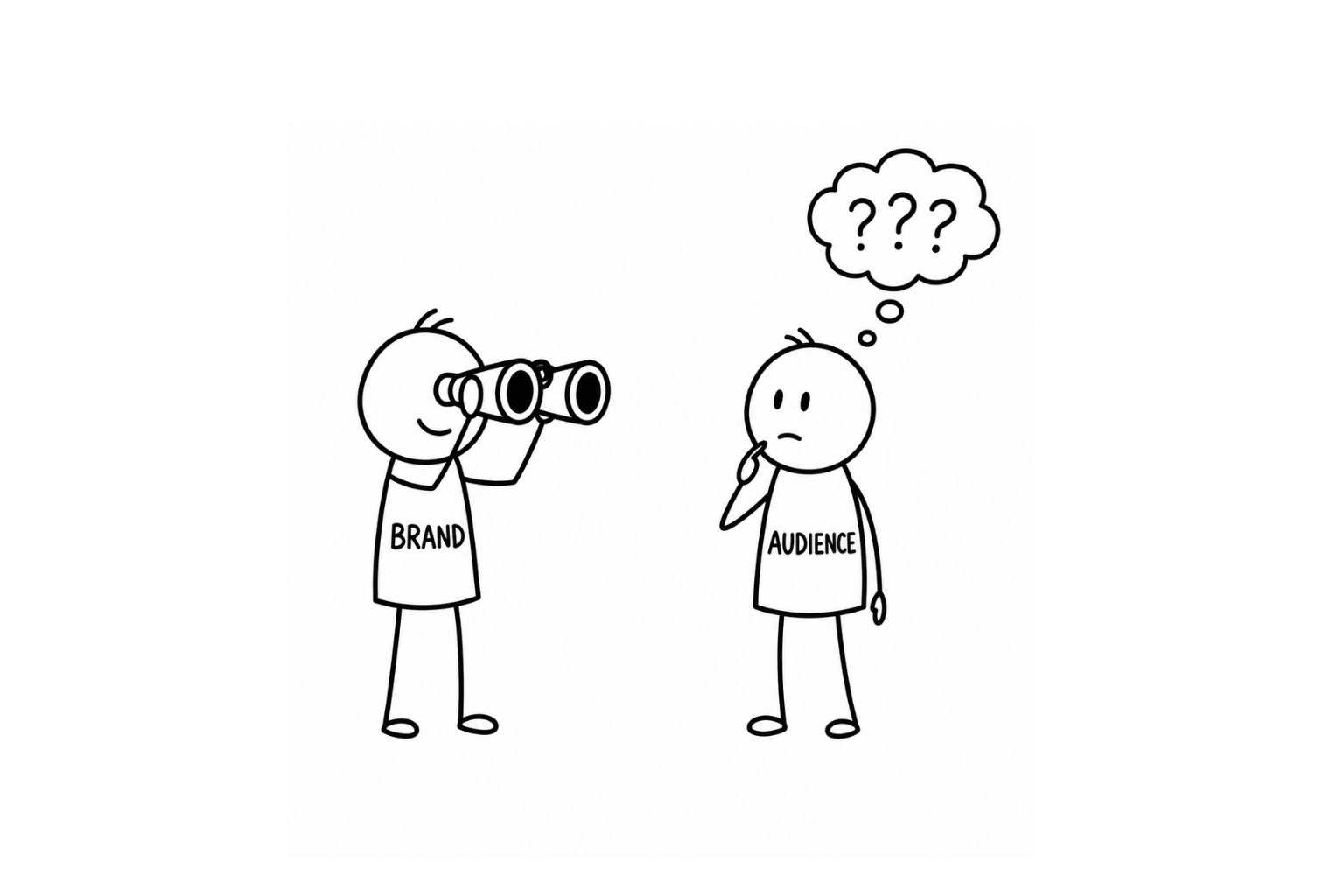
Yes yes we know. Audience first. It’s a marketing concept that keeps getting repeated. A valuable one at that. But with AI disrupting search we have to finally acknowledge that our audience is no longer captive. Long gone are the days when we all would see the same commercials during primetime that would then become part of the cultural zeitgeist. This isn’t new. Streaming interrupted much of that. But with personalized search, we aren’t sharing the content at all, not by a long shot. Not now when your algorithm knows your food allergies, coffee preference, and your propensity for jigsaw puzzles. As we learn to market in this era of algorithm volatility, we need to recognize that AI is not just changing where people search. It is changing when and how brands can enter the customer journey, what information people expect at each stage, and what earns their trust.
This is a big shift, especially for those of us who are dragging ourselves through the trenches of SEO. Search Optimization looks different at each stage of the funnel, especially at the top where the pain point is being addressed. Certainly, this isn’t actually new, but the weight of it is. Top of the funnel is no longer just brand awareness. The top of the funnel is audience awareness, and shifting the way we look at and market the funnel can help keep that front of mind. It should start with the brand being aware of the audience and understanding their problem, language, uncertainty, context, and questions before they know what solution they need.
Top of funnel marketing has always been about getting your brand name out there, so after the user spends time and effort finding the solution they need for a problem, they know who you are. But now, it’s starting in LLMs like ChatGPT, Google AI, or Perplexity. Instead of asking your friend, your mechanic, your neighbor, or your doctor (eeeek), the user has AI, where they can ask things without judgment, at any time of the day, and get an answer immediately. In those 2 a.m. searches, wondering if the rattling sound coming from your dryer is going to cost you big, we now have an entry point that starts even earlier in the customer journey. And that journey is NOT linear. People can enter through an anxious ChatGPT question, an AI Overview, Reddit, TikTok, YouTube, a comparison query, a traditional search, or a branded search after hearing about the company somewhere else. They can also jump forward and backward between stages.
Even as we move further down the funnel, consideration has become the entry point for users by way of a million and one listicles and comparison charts. When done well, this works, but it has to be more sophisticated than what keeps being churned out. Those early days of easy comparison charts are begging to be rewritten with data that is fact-checked on reputable sites in the eyes of Google and clear and concise for the user.
Self-aggrandizing lists and charts do nothing to establish users' confidence, and more often than not can alienate your audience. It all becomes low-trust garbage content. Consideration is less a pros and cons chart and more an outsourcing for peer-to-peer review for trust and validation. And honestly, it’s about time. I don’t want or trust a company to tell me that their product is good. I want someone like me to try it first and give it to me straight. There is a valid reason Google has made review sites like Reddit part of its search strategy and why LLMs rely so heavily on them too.
Those validation pieces are what lead to the conversion. Certainly, one can spot that in their own customer journey. Before getting to the purchase page, a one star review for shoddy service or poor materials has the buyer clicking to a new solution in seconds.
Traditional Marketing Funnel vs. Audience-First Funnel
|
Traditional Marketing Funnel |
Audience-First Funnel |
|
Awareness: Make people aware of the brand. |
Problem Awareness: Understand what the audience is experiencing before they’re even looking for a product, service, or brand. |
|
Interest: Educate people about what you offer and why they might need it. |
Understanding: Help people make sense of their problem, ask better questions, and understand what their options actually are. |
|
Consideration: Compare your product or service against competitors. |
Validation: Give people the evidence they need to evaluate their options: third-party perspectives, reviews, original data, expert input, transparent comparisons, limitations, and proof. |
|
Conversion: Convince the user that your company is the best choice. |
Selection: Make it easy for an already-informed user to determine whether you are the right choice for their needs. Answer the sophisticated questions their research has taught them to ask. |
|
Retention / Advocacy: Keep customers engaged and encourage referrals. |
Experience / Advocacy: Deliver an experience worth talking about, because your customers’ experiences become part of how the next audience researches and validates you. |
The best way to reach a converting user now is to give them the proof they need. Show them third-party reviews, give them factual specs on the product, and use provable data and research to inform. The brand works for the user now, so don’t underestimate them.